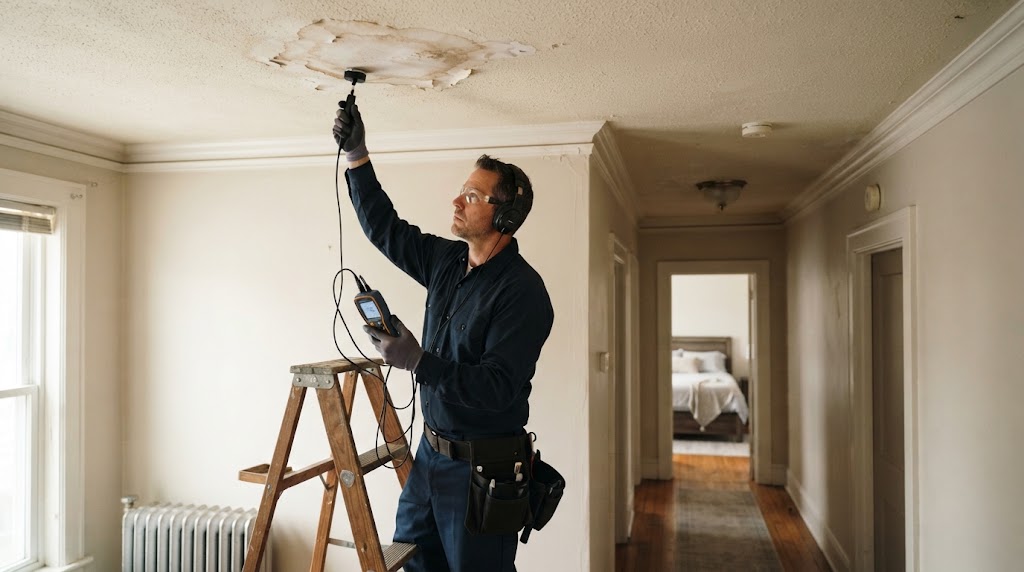
Hidden Water Leak Detection in Brick, NJ
Water leaks don't always announce themselves with a dramatic burst pipe. More often, they are silent threats lurking behind drywall, under floors, or inside ceilings. At NJ Leak Detection, we specialize in hidden water leak detection in Brick NJ. We locate the source of the moisture before you resort to ripping open walls.
Signs You Have a Leak Behind a Wall or Ceiling
Because these leaks are hidden from view, you must rely on secondary indicators. Watch for these warning signs:
- Unexplained Water Bill Increases: A sudden spike in your monthly statement is often the first sign of a hidden plumbing leak.
- Meter Movement: If your water meter indicates flow even when all fixtures and appliances are completely turned off, there is an active leak in the system.
- Staining or Discoloration: Brown, yellow, or copper-colored stains on ceilings or walls indicate water pooling behind the surface.
- Damp or Soft Drywall: Drywall that feels cool to the touch, soft, or visibly swollen is absorbing moisture from an internal source.
- Peeling Paint or Wallpaper: Moisture trapped behind the wall surface will cause paint to blister and wallpaper to detach.
- Musty Odors: A persistent, damp, or mold-like smell in specific rooms or cabinets is a strong indicator of hidden moisture.
Common Sources of Hidden Leaks
Pinpointing the leak requires understanding the complex network of plumbing within your home. Common culprits include:
Failed Pipe Fittings: Connections behind shower valves, sink supply lines, and toilet connections can degrade or loosen over time, causing slow, persistent drips inside the wall cavity.
Corroded Piping: Older copper or galvanized pipes can develop pinhole leaks due to corrosion or water chemistry, spraying a fine mist inside the wall.
Drain and Waste Lines: Leaks in drain pipes often only occur when water is actively draining (e.g., when a shower is running or a toilet is flushed), making them trickier to spot than pressurized supply line leaks.
Roof and Exterior Intrusion: Not all hidden water is from plumbing. Wind-driven rain can penetrate compromised siding, flashing, or roofing, traveling down wall cavities. This is a common issue in Brick's coastal environment, especially during severe Nor'easters or post-hurricane conditions.
How We Find the Source
We utilize advanced, non-destructive tools to locate hidden moisture and trace it back to its origin:
- Thermal Imaging: Infrared cameras detect the minute temperature differences caused by evaporating moisture or hot water leaks, allowing us to "see" the water's path behind the drywall.
- Moisture Mapping: Professional-grade moisture meters quantify the moisture content in various building materials. By tracking the highest concentration of moisture, we can follow the trail directly to the source.
- Acoustic Listening: For pressurized plumbing leaks, highly sensitive microphones can detect the sound of water escaping the pipe, even inside a wall.
Minimizing Unnecessary Damage
The primary goal of professional leak detection is to prevent indiscriminate demolition. Without the right tools, a contractor might punch numerous holes in your drywall trying to find a leak. Our pinpointing methods ensure that when the wall is finally opened for repair, it is exactly where the problem lies, saving you significant money and hassle on drywall repair and painting.